



Off-white, sage green, sand or powder blue? Choosing the colour of baby's room sets the tone for everything else. For a calming nursery, go for soft shades, combine them methodically and choose a low-emission paint, applied well before the birth.
In short: for a calming nursery, choose soft, muted colours (off-white, beige, sand, sage green, powder blue, light terracotta) and combine them using the 60/30/10 rule. For paint, choose one rated A+ on the French indoor air emissions label, finish the work at least 3 months before baby sleeps there and air the room thoroughly.
Nursery colour: what a shade really brings
Colours are often credited with powers: blue that calms, yellow that energises… In reality, the effect of a colour is mostly about atmosphere and personal feeling. No shade will make baby sleep on its own.
What matters is that the room feels soft to you at any time of day and stays easy to live with. Soft, muted tones close to those found in nature often give a sense of calm; very bright colours on large surfaces can quickly feel busy.
And what does baby see? In the first weeks, they mainly perceive light, light and dark areas and large shapes. Their colour vision develops over the months: at around 5 months it is generally good, although it keeps maturing. Every baby moves at their own pace. So wall colour matters mainly for the atmosphere, and for you, who will spend long moments in this room.
Test before you paint
Light changes everything: the same shade can look colder in a north-facing room and warmer in a very sunny one. Paint large samples on two walls and look at them in the morning, afternoon and evening, by lamplight.
Which colours for a nursery? 6 soft shades
Off-white and cream
Bright, they give a sense of space and act as a backdrop for everything else. Choose a slightly warm white rather than a pure white, which can look cold.
Beige and sand
Warm and enveloping, they go with light wood, linen and wicker. A lovely base for a gender-neutral nursery, to adapt as you like.
Sage green
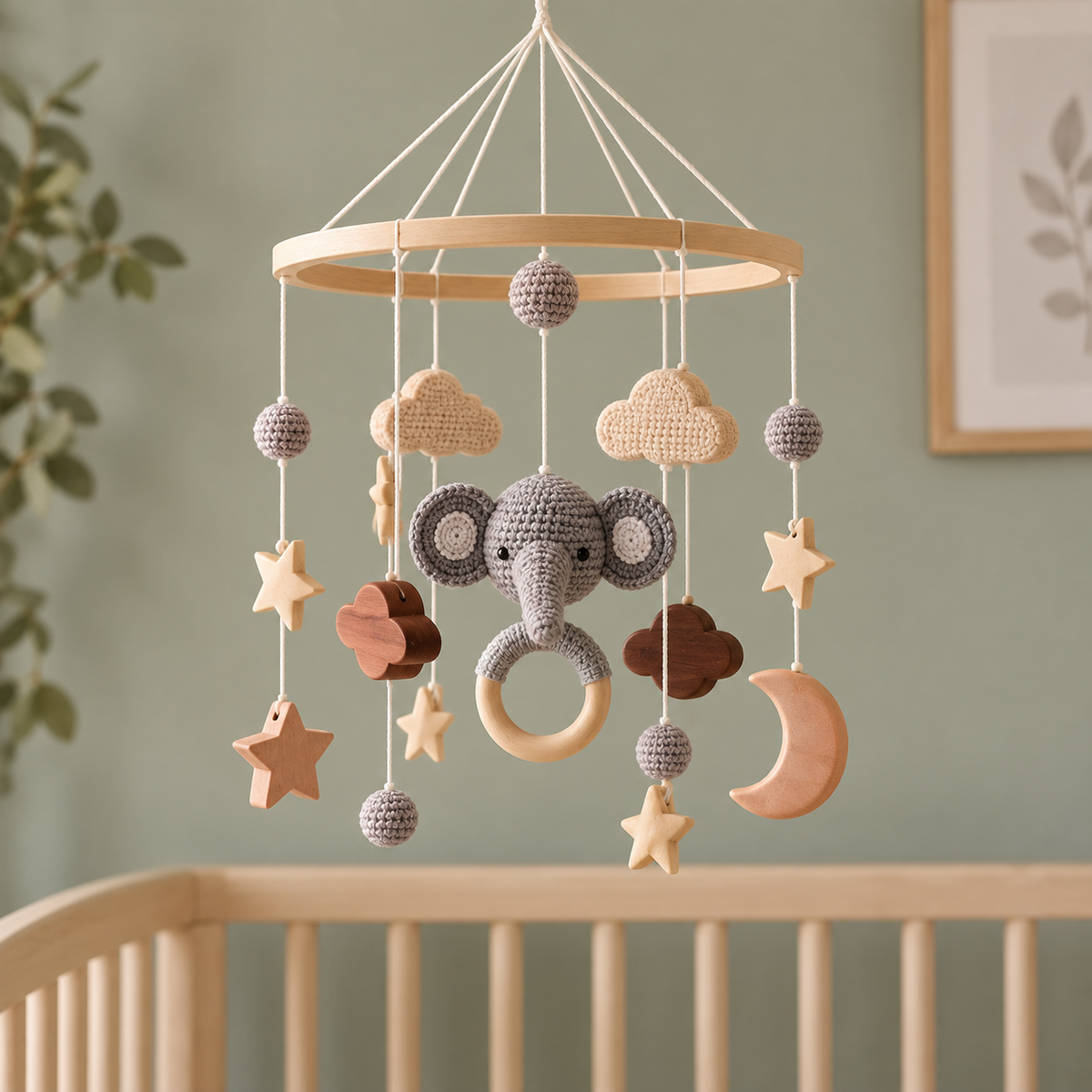
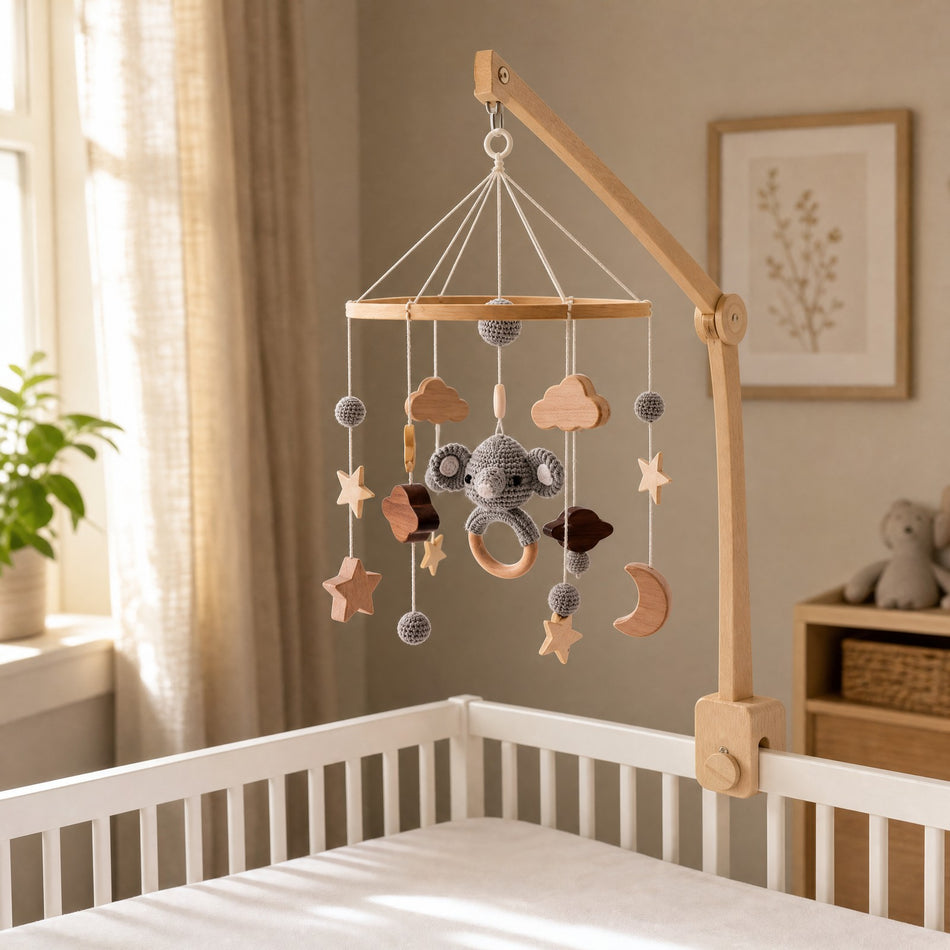
This greyish green evokes nature and plants. It pairs with cream, wood and a few touches of terracotta, and works as well on a whole wall as at half height. The soft grey, beige and warm brown shades of our elephant mobile go with it beautifully.
Powder blue and grey-blue
Fresh and airy, they evoke the sky. Warm them up with wood, beige or a touch of caramel to avoid a cold look. To take the idea further, discover our ideas for a sky-themed nursery.
Terracotta and clay pink
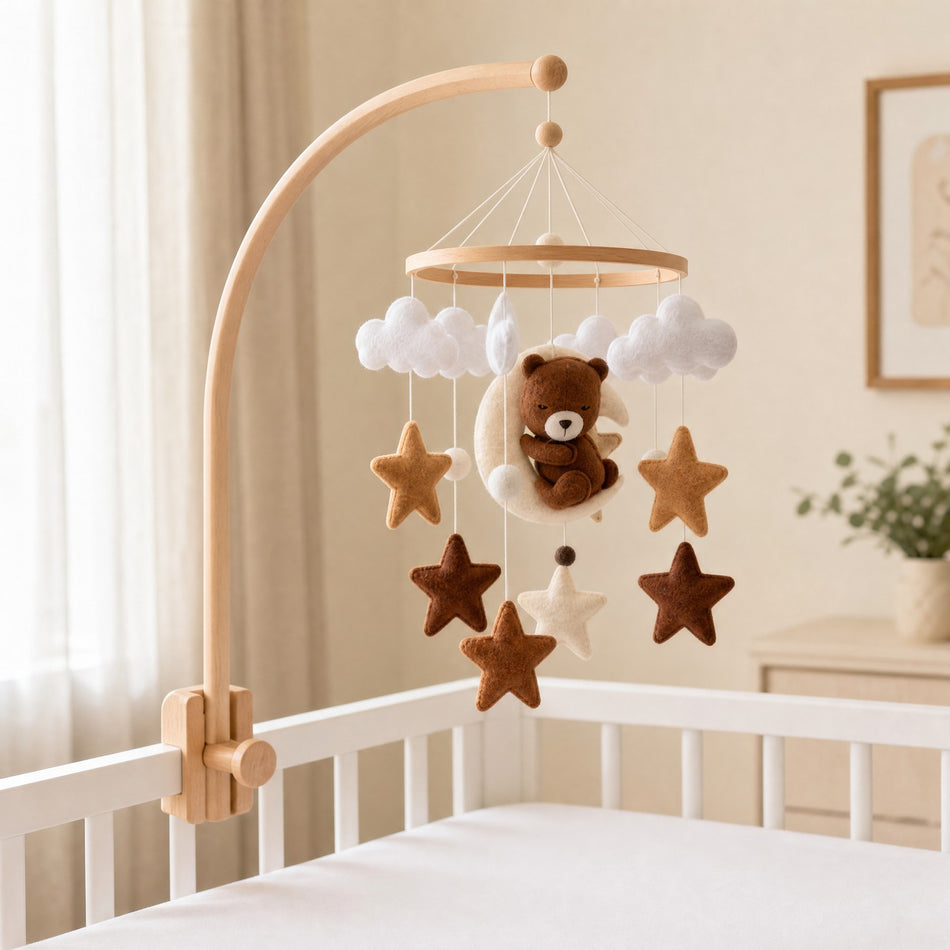
These earthy tones add a warm, sunny note. On a feature wall or at half height, they add character without dominating. Our Ourson Céleste mobile, with its little bear among the stars in beige and caramel, extends this warm range.
Soft yellow and mustard
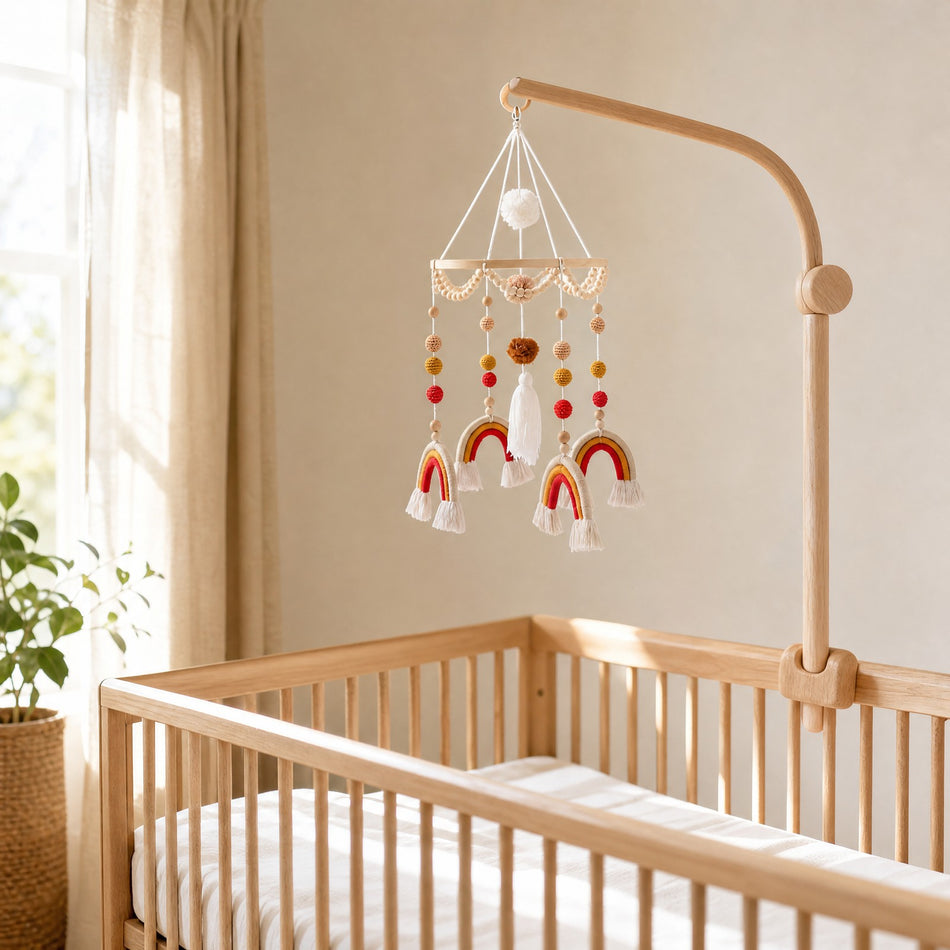
As small touches, they bring light: a cushion on the armchair, a poster, the rainbows of a mobile. On a whole wall, choose a very pale version.
Want to follow the trend? Sage green, powder blue and dusty pink are among the 2027 colours of the year: discover them in our article on 2027 colour trends for the nursery.
Combining colours: the 60/30/10 rule in the nursery
For a harmonious room, a simple decorating rule helps a lot: 60/30/10.
- 60% for the dominant colour: walls and large surfaces.
- 30% for the secondary colour: furniture, curtains, rug.
- 10% for the accent colour: the mobile, frames, a cushion on the armchair.
It is not a law, just a guide so that no colour takes over. Three example palettes:
- Natural softness: sage green walls, light wood and cream textiles, touches of terracotta.
- Evening sky: powder blue walls, sand beige, touches of caramel or mustard.
- Warm cocoon: off-white walls, linen and wood, touches of terracotta and rust.
The mobile often makes a lovely accent, as it concentrates colour in one spot. Our blue whale mobile, for example, brings together grey and navy whales, light clouds and beige coral below a wooden hoop: a pretty touch of blue in a sand or off-white room.
Nursery paint: choosing a low-emission paint
Paints are one of the possible sources of indoor air pollutants. A few simple habits help you paint with more peace of mind.
Look for the indoor air emissions label
In France, a mandatory “Émissions dans l'air intérieur” label shows the level of volatile substance emissions from paints and varnishes, from A+ (very low emission level) to C (high emission level). For baby's room, choose an A+ rated paint: the French public health agency, Santé publique France, points out that this label helps you choose the products that emit the fewest volatile organic compounds. Very low does not mean zero: ventilation remains essential.
This label comes from French regulations: if you buy your paint in Belgium or the Netherlands, ask the manufacturer or the shop about its emissions.
Paint well before the birth
The French health insurance (Assurance Maladie) advises finishing any work well before the birth, then airing the room thoroughly to clear the pollutants released. Santé publique France advises having baby's sleeping space ready at least three months before baby moves in, and not taking part in the work while pregnant: hand the roller to a loved one or a professional.
Air the room, during and after
Open the windows wide while working, then keep airing thoroughly once the work is finished. Then keep up the habit: the official French health site Santé.fr advises opening the windows wide twice a day for at least ten minutes, summer and winter, and the Assurance Maladie advises keeping baby's room at 18 to 20 °C, aired every day. Avoid masking the smell of paint with candles or room fragrances: airing is better than scenting.
Matt, eggshell or satin?
An eggshell or satin finish is often easier to clean than a deep matt, handy for the little marks of the years to come. Matt gives a very soft look. In every case, read the label carefully before buying.
Beyond the walls: textiles, wood and mobile to complete the palette
The walls are only part of the palette. Curtains, rug, armchair textiles, frames and mobile extend the chosen colours. Stay within the same family of shades, and vary the materials instead: linen, cotton, wool, wicker, light wood. For more ideas, see our 15 nursery decor ideas.
Whatever the palette, baby's cot stays empty: they sleep on their back, in a sleeping bag, on a firm mattress, with no bumper, pillow, duvet or soft toy. Colourful cushions stay on the armchair.
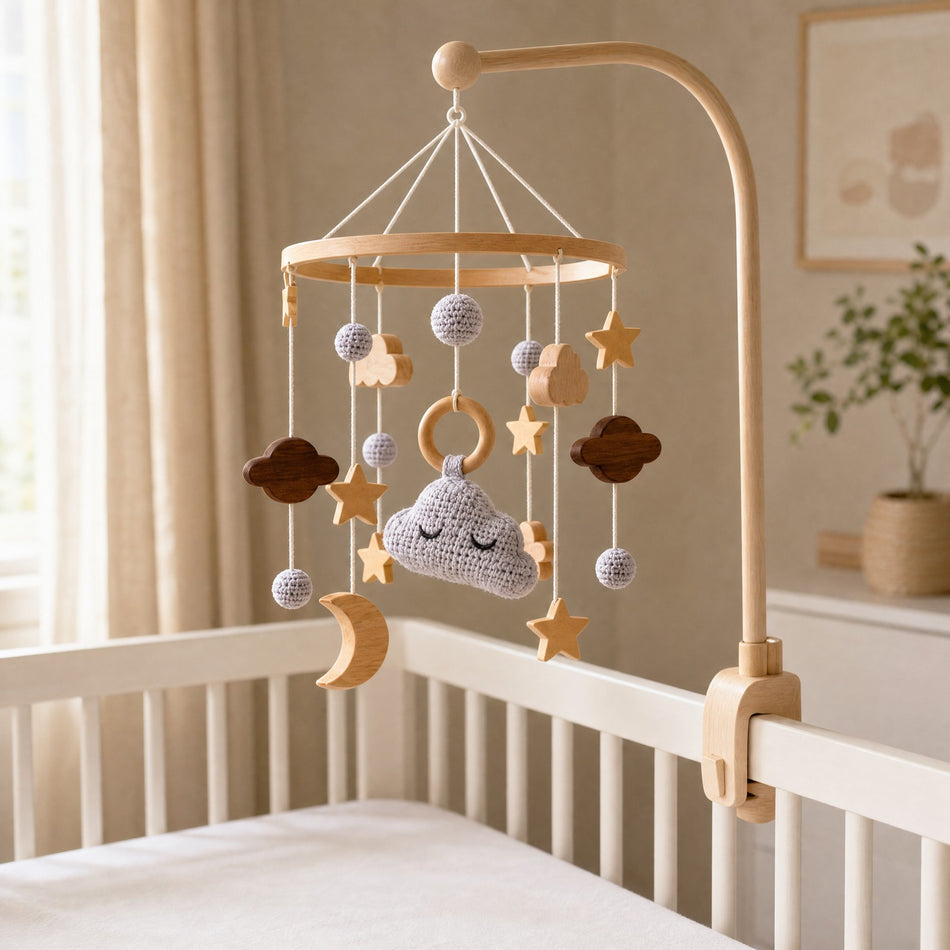
As for the mobile, the rule stays the same: it is for looking at and always stays out of baby's reach. Hang it out of baby's reach, even with arms stretched out, with nothing hanging towards the cot, and check its attachment regularly. Remove it from above the cot as soon as baby starts to push up on hands and knees, or at around 5 months, whichever comes first: it can then stay in the room as decoration, out of reach. To review everything before baby arrives, use our nursery safety checklist.
FAQ: nursery colour and paint
What is the most calming colour for a nursery?
There is no magic colour. Soft, muted shades (off-white, beige, sage, powder blue) often give a sense of calm; what matters is that you like the atmosphere and that it stays soft.
Can you paint the nursery white?
Of course. Choose an off-white or cream, which is warmer, and warm it up with wood and natural textiles.
When should you paint the nursery?
Well before the birth, according to the Assurance Maladie, then air the room thoroughly. Santé publique France advises finishing at least three months before baby sleeps there, and not taking part in the work while pregnant.
Which paint for a nursery?
A paint rated A+ on the French indoor air emissions label, the lowest emission class. Still air the room thoroughly during and after the work.
Does baby see the colours of their room?
Not straight away. In the first weeks, they mainly perceive light, contrasts and large shapes; their colour vision generally becomes good at around 5 months, then keeps developing.
A touch of colour, gently
The mobile is often the accent note that ties the whole palette together. Discover our baby mobiles, handmade, in cream and beige tones or lifted with terracotta, mustard or powder blue. Delivery is free to mainland France, Belgium and the Netherlands, and returns are free for 30 days.
Sources: Légifrance, decree of 19 April 2011 on labelling of building, wall and floor products and paints and varnishes for volatile pollutant emissions (French); Assurance Maladie, pregnancy and early childhood: acting on the environment (French) and how to put a baby to bed safely (French); Santé.fr, adopting good habits to improve indoor air (French) (Santé publique France, 1000 premiers jours) and improving the air at home as future or new parents (French); American Academy of Ophthalmology, “Vision Development: Newborn to 12 Months”; American Academy of Pediatrics (HealthyChildren.org), “Make Baby's Room Safe: Parent Checklist”.
0 comments