




A bedtime routine is a short series of calm gestures, always in the same order, that tells baby night is coming. Evening after evening, it becomes a cue for them and a gentle moment for you. Here is how to build yours, step by step, then adapt it from birth to 12 months.
In short: choose a few calm gestures (dimmed light, change and pyjamas, last feed, cuddle, lullaby) and repeat them every evening in the same order. In the first weeks, follow baby's sleep cues rather than the clock. And always end the same way: baby on their back, in their sleeping bag, in an empty cot.
You may already have read our 7 gentle tips for baby's sleep. Here, it is time for practice: a concrete evening routine, and its version for each age.
Why set up a bedtime routine for baby?
The French public health site 1000 premiers jours (Santé publique France) sums it up simply: as baby grows, routines help them fall asleep. By repeating the same gestures every evening at bedtime, they understand that it is time to sleep. It is reassuring, and it softens the evening separation.
A routine is not a method to make baby “sleep through the night”. It is a cue that builds up over weeks. Some evenings everything flows gently; on others, baby will need more cuddles.
The evening is also the time to mark the difference between day and night. The 1000 premiers jours site recommends dimming the lights in the evening, opening the shutters wide in the morning and keeping the liveliest activities for the daytime.
Preparing the room before the evening routine
Before the first gesture, a quick look at the setting, with these official guidelines:
- A room at 18 to 20 °C, aired every day.
- Soft light in the evening, then darkness for the night.
- Baby on their back, flat, at night as for naps, in a sleeping bag suited to their size.
- A firm mattress, sized to the cot, with a well-fitted sheet.
- An empty cot: no pillow, duvet, blanket, bumper, sleep positioner, comforter or soft toy.
- Their own cot, in your room, for at least the first six months.
- No screens before sleep: a French health insurance (Assurance Maladie) guideline that applies at every age.
The bedtime routine, step by step
There is no perfect routine. Choose gestures that suit you and, above all, keep the same order from one evening to the next. Here is a framework to adapt:
- Lower the lights and the volume. A soft lamp, quieter voices, the television off: the house switches to evening mode.
- The bath, if that is your moment. Check with a thermometer that the water is below 37 °C, and never leave baby alone, even for a few seconds.
- Change, pyjamas and sleeping bag. Always in the same place, with the same little words.
- The last feed, in calm. Breast or bottle in the half-light, then put baby down without a bottle: 1000 premiers jours notes that a bottle in bed can get them used to needing food to fall asleep, and increases the risk of tooth decay.
- A cuddle and a story. A few pages, even for a tiny baby: it is mostly your voice that counts.
- A lullaby. Sung, hummed, or carried by a music box wound up at the same moment every evening.
- Into the cot, on their back. Always the same phrase, such as “goodnight, sweetheart”, a last look, and the routine ends there.
The right length? Short enough to keep up every evening, even when you are tired. Three gestures repeated faithfully are better than a long programme abandoned after a week.
Baby's evening routine: adapting it to each age
From 0 to 3 months: follow their sleep cues
At birth, the internal clock that regulates waking and sleep is not yet set: a newborn may sleep more during the day than at night, at irregular times. There is no point imposing a schedule. The 1000 premiers jours site rather advises putting them down without waiting too long when they show signs of sleepiness: yawning, rubbing their eyes, whimpering for no reason, getting fidgety.
At this age, the routine comes down to a few gestures: change, sleeping bag, cuddle, a softly sung lullaby. To help them feel the difference between day and night, the Assurance Maladie advises daytime feeds in full light and night feeds in the dark. As a guide: from birth to 3 months, babies generally sleep 14 to 17 hours a day, naps included.
From 3 to 6 months: a routine takes shape
Over the weeks, their rhythm becomes more regular. Most babies start to “sleep through” at around 3 or 4 months, says 1000 premiers jours, but this varies a lot from one child to another and can take several months. The routine can grow: a fabric book looked at together, a song that is always the same. As a guide: from 4 to 11 months, babies generally sleep 12 to 16 hours a day.
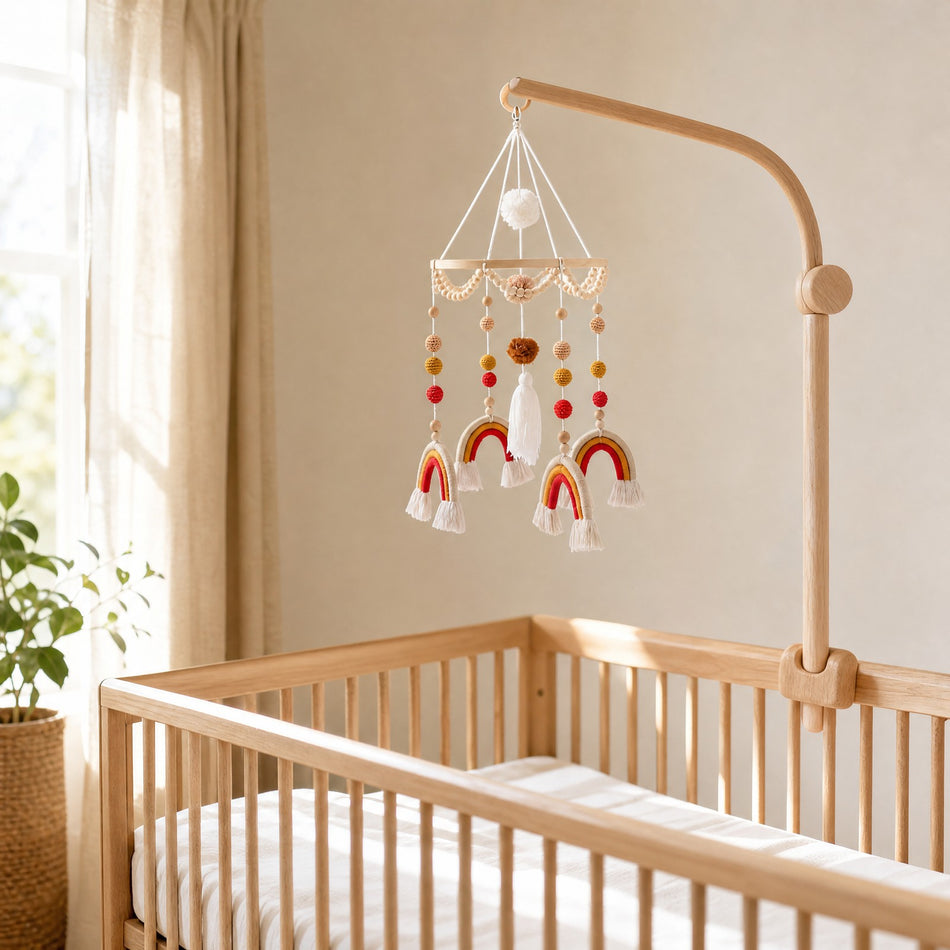
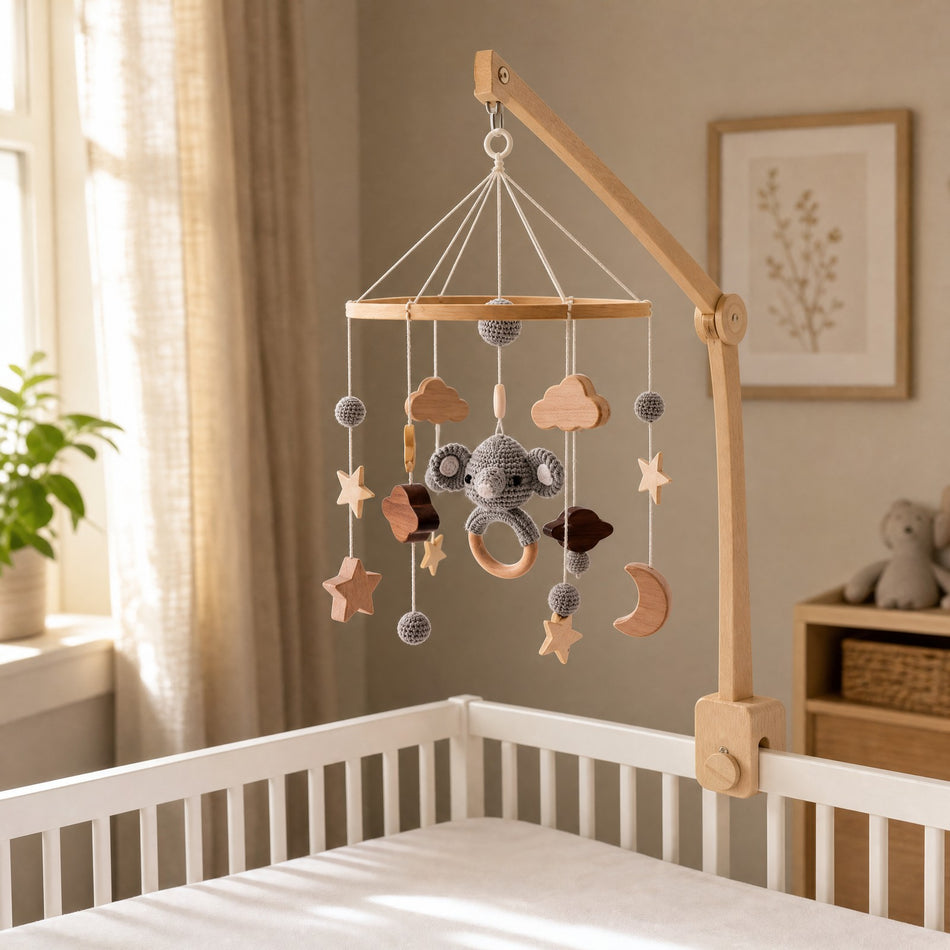
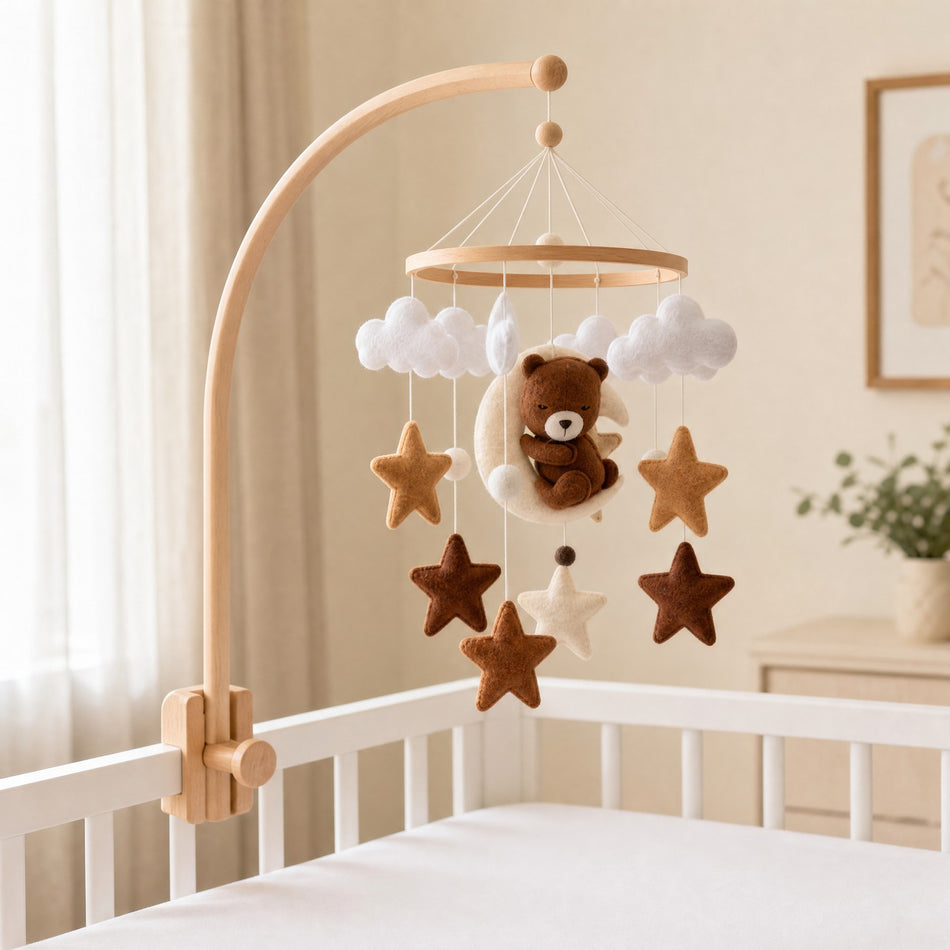
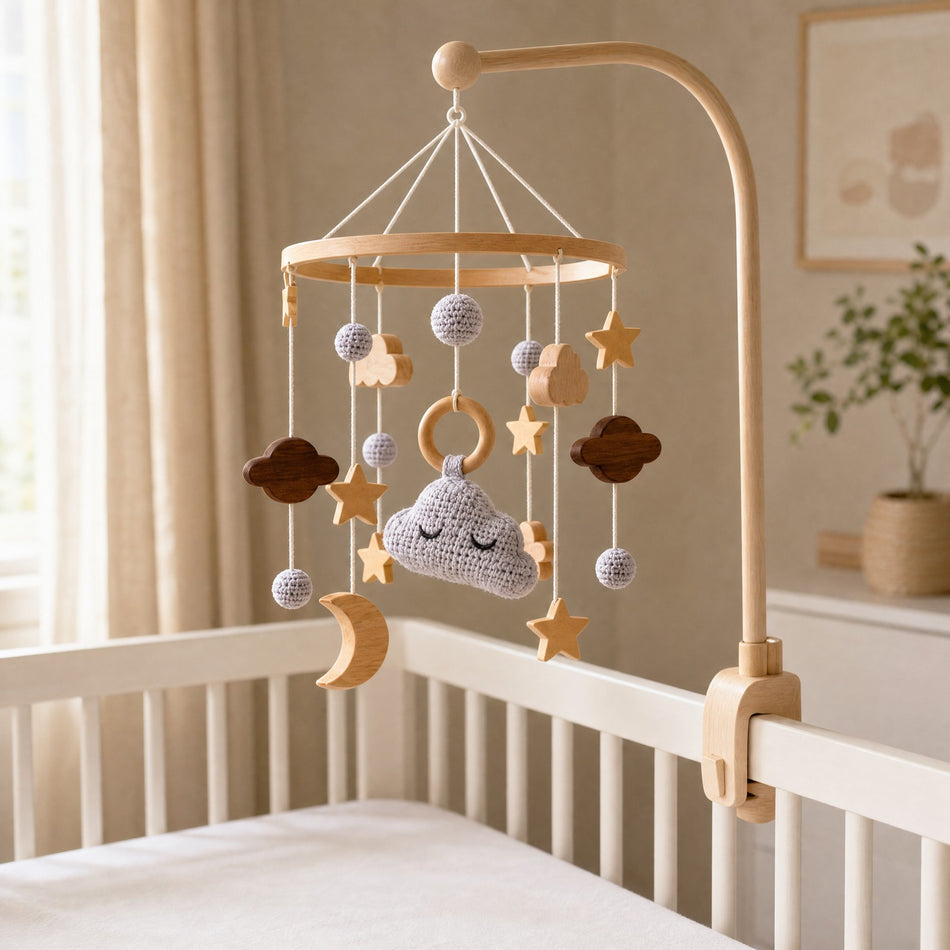
If a mobile hangs above the cot, it stays out of reach, even with arms stretched out, with nothing hanging towards baby. And now is the time to plan ahead: remove it as soon as baby starts to push up on hands and knees, or at around 5 months, whichever comes first. It can then decorate the room, out of reach. All our guidelines are in our article baby mobile: from what age, and until when.
From 6 to 12 months: a real evening ritual
After six months, baby can sleep in their own room if your home allows, or stay in yours; the recommendations relayed by Santé publique France even mention the first year. The routine becomes a familiar moment that you can enrich: a nursery rhyme with actions, saying “goodnight” to the things in the room, a slightly longer story.
Your baby rolls over? The Assurance Maladie says that once they are big enough to roll over on their own, you do not force them to stay on their back. Simply keep putting them down on their back, in a cot that is always empty, and keep lively games for the daytime.
Lullaby or music box: the soundtrack of the routine
Among the habits listed by 1000 premiers jours: giving a cuddle, reading a story, playing soft music, singing a lullaby. A song has one advantage: it travels everywhere with you, and it is your voice. For the lyrics, pick from our traditional lullabies with lyrics.
A music box can also accompany the evening ritual. You start it at the same moment each time, for example after pyjamas, and its melody can become a bedtime sound cue. Our wooden raccoon music box can play this role, as can our white wind-up music box or our round wood-effect model.
Two rules: a music box is not a toy, and it stays out of baby's reach, on a shelf or hung out of reach, never in the cot. To choose one well, read our guide baby music box: how to choose and use one.
Restless nights, travel: staying on course gently
Baby moves, grunts or whimpers while sleeping? The 1000 premiers jours site reminds parents that this “restless sleep” is a normal phase, and that it is generally not necessary to intervene. If they seem uncomfortable or moan, you can of course reassure them with your presence.
When they wake, keep the atmosphere calm, without noise or bright light. On holiday or at the grandparents', bring the cues that travel well (the sleeping bag, the song, the order of gestures) and keep the same sleep rules, including in a travel cot, without an added mattress.
If nights become exhausting, talk to your child's doctor or health visitor, and organise ways to take turns so everyone can rest. Never give baby medication to make them sleep, and never shake them: if exhaustion takes over, put them down on their back in their cot and hand over to someone else.
FAQ: baby's bedtime routine, your questions
From what age can you start a bedtime routine?
From the first weeks, in a very simple form: change, sleeping bag, cuddle, song. It will grow over the months as baby's rhythm becomes more regular.
What time should baby go to bed in the evening?
In the first months, there is no time to impose: follow their sleep cues. Their rhythm then becomes more regular little by little; between 1 and 2 years, 1000 premiers jours mentions regular bedtimes and waking times.
How long should the evening routine last?
There is no official length. What matters is regularity: a routine short enough to keep up every evening, in the same order.
Can a comforter be part of the routine?
It can accompany the evening cuddle. For sleep, the safest option remains an empty cot, with no comforter or soft toy, as the recommendations relayed by Santé publique France state; 1000 premiers jours specifies that before six months, no comforter should be nearby. If in doubt, ask your child's doctor for advice.
Should screens be avoided before bed?
Yes. The Assurance Maladie advises no screen exposure before age 3, not even in the background, and at every age, no screens before sleep. The 1000 premiers jours site also notes that the blue light from screens can disturb baby's rhythms.
Fancy adding a little melody to your routine? Discover our music boxes, to hang out of baby's reach. And if you are preparing the whole room, build your pack: a mobile, a music box and an arm, with €20 off the total.
Sources (in French unless stated): Santé publique France, 1000 premiers jours: baby's sleep (on Santé.fr); Assurance Maladie: how to put a baby to bed safely; Santé publique France: sudden unexpected infant death; Service Public: screens and children under 3; Santé publique France, 1000 premiers jours: preventing household accidents (on Santé.fr); Le Bonheur Children's Hospital: Crib Safety (English).
0 comments