


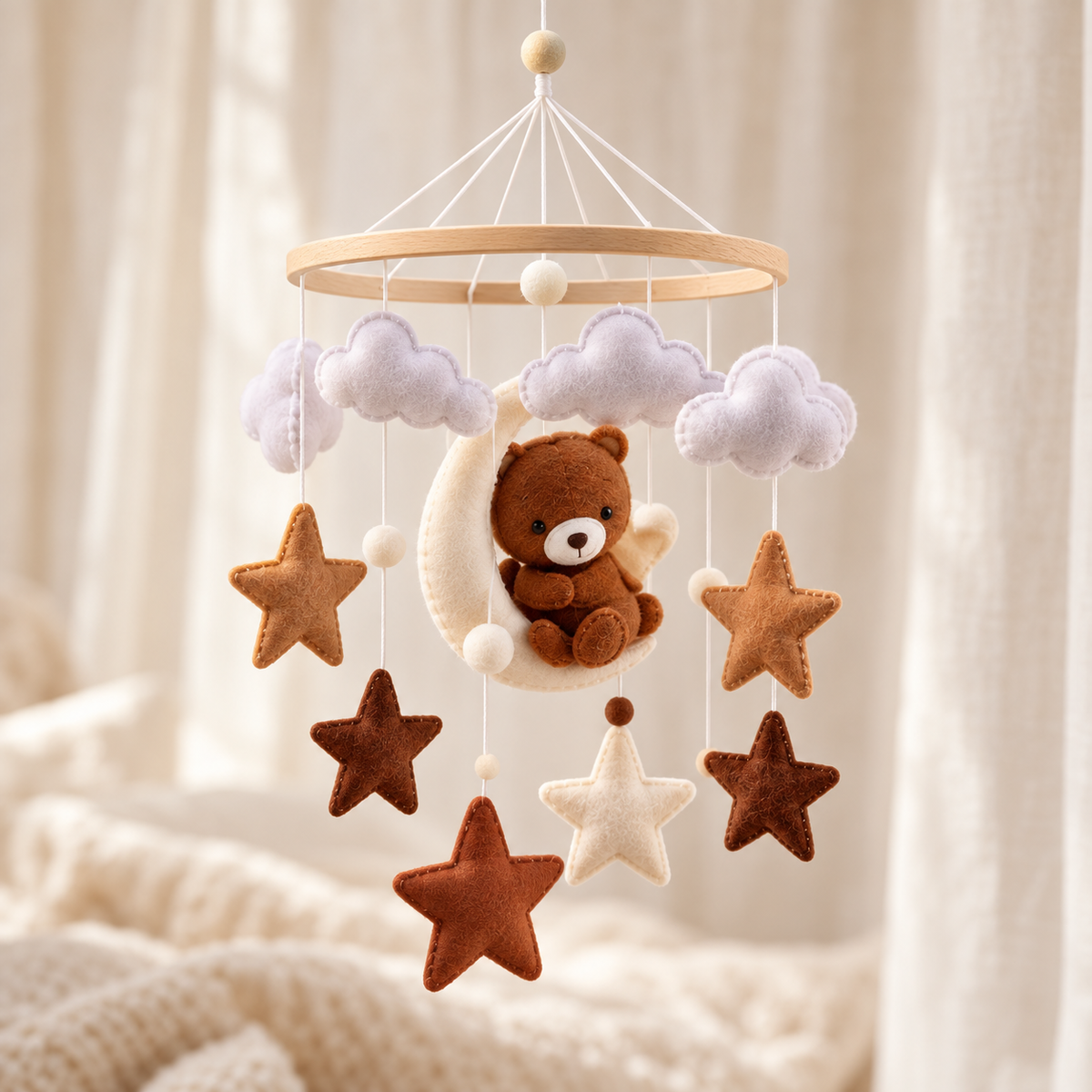

A soft voice, a few repeated notes, the light going down: singing a lullaby is one of the loveliest evening rituals, and one of the simplest. Here are 7 traditional French lullabies and nursery rhymes, with their original lyrics and a short English summary, to hum at bedtime, plus our tips for singing them, even if you think you sing out of tune.
In short: among the easiest traditional French lullabies to remember are “Fais dodo, Colas mon p'tit frère”, “Dodo, l'enfant do”, “Au clair de la lune”, “À la claire fontaine”, “Ah ! vous dirai-je, maman”, “Frère Jacques” and “Une souris verte”. Sing them slowly, softly, always at the same point in the bedtime routine: repetition is what turns them into a cue.
Why sing a lullaby to your baby?
There is no method to follow: a lullaby is above all a shared moment. The French public health site 1000 premiers jours (Santé publique France) lists “singing a lullaby” among the little habits of the evening ritual, alongside a cuddle, a story or soft music. It is, the site says, a chance to share a dedicated, pleasant moment with baby, in calm.
A lullaby also has the power of repetition. According to the same source, by repeating the same gestures every evening at bedtime, baby understands that it is time to sleep. The same song, at the same moment, thus becomes a small familiar signal.
Finally, a lullaby needs no screen or device. A plus, since the blue light from screens can disturb baby's rhythms and is best avoided in the evening and at night. Your voice is enough.
7 traditional French lullabies with lyrics
These songs have been passed down for generations. Here are their traditional French lyrics, with a short note on each.
1. Fais dodo, Colas mon p'tit frère
A great classic with a rocking rhythm. Its author is unknown and its melody dates back to the 18th century. In English: “Go to sleep, Colas my little brother, you'll have some milk. Mummy is upstairs baking a cake, Daddy is downstairs making chocolate.”
Fais dodo, Colas mon p'tit frère,
Fais dodo, t'auras du lolo.
Maman est en haut
Qui fait du gâteau,
Papa est en bas
Qui fait du chocolat.
Fais dodo, Colas mon p'tit frère,
Fais dodo, t'auras du lolo.
In French baby talk, “lolo” means milk. And nothing stops you from slipping your child's name in place of Colas.
2. Dodo, l'enfant do
Only four lines, easy to remember from the very first evening, that you can repeat for as long as needed, softer and softer. In English: “Sleep, child, sleep, the child will soon be asleep.”
Dodo, l'enfant do,
L'enfant dormira bien vite.
Dodo, l'enfant do,
L'enfant dormira bientôt.
3. Au clair de la lune
Considered an 18th-century song by an unknown author, it has a lovely claim to fame: in 1860, the inventor Édouard-Léon Scott de Martinville sang it into his phonautograph. It is the oldest known recording of a human voice. Here are its first two verses. In English: “By the light of the moon, my friend Pierrot, lend me your quill to write a note. My candle has gone out…” Pierrot replies that he has no quill and is already in bed.
Au clair de la lune,
Mon ami Pierrot,
Prête-moi ta plume
Pour écrire un mot.
Ma chandelle est morte,
Je n'ai plus de feu ;
Ouvre-moi ta porte
Pour l'amour de Dieu.
Au clair de la lune,
Pierrot répondit :
« Je n'ai pas de plume,
Je suis dans mon lit.
Va chez la voisine,
Je crois qu'elle y est,
Car dans sa cuisine
On bat le briquet. »
4. À la claire fontaine
It comes from an anonymous poem written between the 15th and 18th centuries. The later verses tell of heartbreak: for baby, many parents keep to the first verse and the chorus, so gentle to hum. In English: “Walking by the clear fountain, I found the water so beautiful that I bathed in it. I have loved you for a long time, I will never forget you.”
À la claire fontaine
M'en allant promener,
J'ai trouvé l'eau si belle
Que je m'y suis baignée.
Il y a longtemps que je t'aime,
Jamais je ne t'oublierai.
5. Ah ! vous dirai-je, maman
Its melody has travelled the world: Mozart composed twelve piano variations on this tune, and English speakers sing it as “Twinkle, Twinkle, Little Star”. In French, children sing these mischievous words: “Oh, shall I tell you, Mummy, what is bothering me? Daddy wants me to reason like a grown-up. I say sweets are worth more than reason.”
Ah ! vous dirai-je, maman,
Ce qui cause mon tourment ?
Papa veut que je raisonne
Comme une grande personne.
Moi, je dis que les bonbons
Valent mieux que la raison.
6. Frère Jacques
Known around the world, this 18th-century song is about a monk who must ring the bells for matins, a prayer said in the middle or at the end of the night. It can be sung as a round: a lovely way to include a big brother or sister. In English, it is often sung as “Are you sleeping, Brother John?”
Frère Jacques, frère Jacques,
Dormez-vous ? Dormez-vous ?
Sonnez les matines ! Sonnez les matines !
Ding, daing, dong ! Ding, daing, dong !
7. Une souris verte
More playful, this nursery rhyme is recorded in the 18th century, or even as early as the late 17th. It fits well at the start of the routine, while putting on pyjamas for example, before the slower songs. Here is its first part. In English: “A green mouse running in the grass, I catch it by the tail and show it to these gentlemen. They tell me: dip it in oil, dip it in water, and it will become a nice warm snail.”
Une souris verte
Qui courait dans l'herbe,
Je l'attrape par la queue,
Je la montre à ces messieurs.
Ces messieurs me disent :
Trempez-la dans l'huile,
Trempez-la dans l'eau,
Ça fera un escargot
Tout chaud.
Our tips for singing a lullaby
- Always at the same moment. After pyjamas or during the last cuddle: the same song, at the same moment, every evening.
- Slowly and softly. Slow the rhythm and lower your voice with each verse, even if you end up just humming.
- In soft light. A small light is enough. For night-time waking, the 1000 premiers jours site also recommends a calm atmosphere, without noise or bright light.
- No need to be in tune. You do not have to sing in tune or know every verse: what matters is the shared moment.
- One or two songs, always the same. No need to go through your whole repertoire: a few faithful lullabies are enough to create a cue.
- Then into the cot, on their back. Once the lullaby is over, put baby down in their cot, always on their back, flat, in a sleeping bag of the right size, with no pillow, cushion, blanket, bumper or comforter nearby, in a room between 18 and 20 °C.
For more ideas about nights, see our gentle tips for baby's sleep.
Lullaby and music box: a lovely duo
A music box does not replace your voice, but it can extend the moment. A ritual idea: sing your lullaby, then start the music box as you leave the room. Its melody, always the same, becomes the last note of the day.
At Doux Cocon, our wooden raccoon music box plays a gentle melody that can accompany the bedtime ritual. To pair it with a mobile, our white wind-up music box hangs by its loop and holds the mobile on its hook, just below. To choose this set well, see our guide to the musical cot mobile. And to bring everything together, you can build your pack: a mobile, a music box and an arm, with €20 off the total.
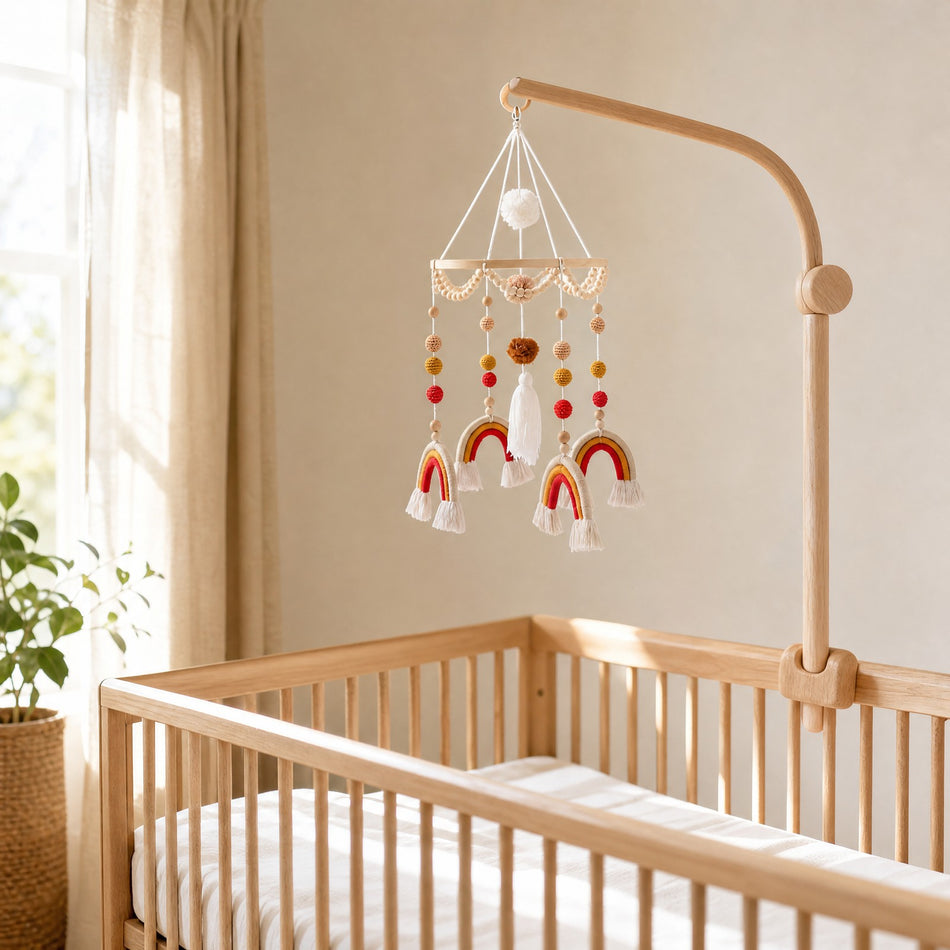
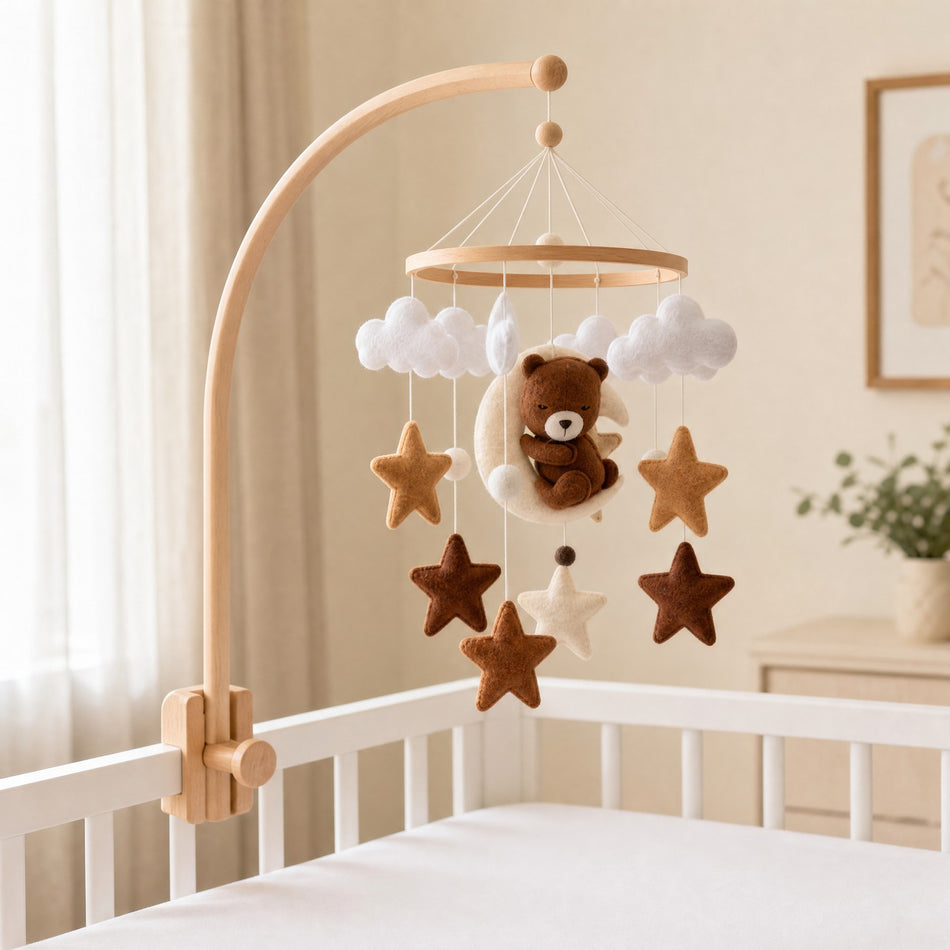
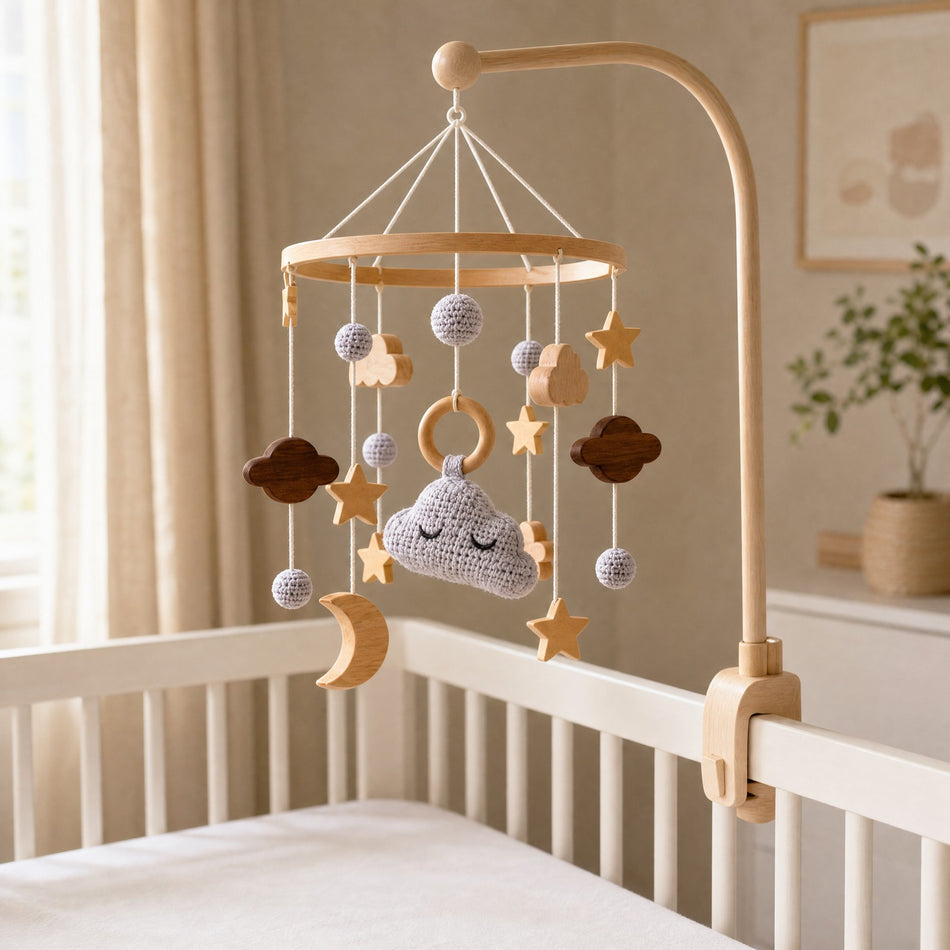
A few precautions: a music box is not a toy. The French consumer authority DGCCRF points out that some products attractive to young children are not toys (decorative dolls, festive decorations…) and should not be put in their hands. So you are the one who starts it, and it stays out of baby's reach, never in the cot. Hung above the cot with a mobile, it follows the same rules, based on the guidance of the American Academy of Pediatrics: securely attached, high enough that baby cannot grab it, with no hanging cord, and removed from above the cot as soon as baby pushes up on hands and knees, or at around 5 months, whichever comes first. It can then move to a shelf, out of reach.
FAQ: your questions about lullabies
What are the best-known French lullabies?
The great classics include “Fais dodo, Colas mon p'tit frère”, “Dodo, l'enfant do”, “Au clair de la lune”, “À la claire fontaine” and “Frère Jacques”. Their short lyrics and simple melodies are easy to remember.
From what age can you sing a lullaby to baby?
There is no age to start: you can sing from the very first days, and the ritual can last well beyond the early years.
What is the difference between a lullaby and a nursery rhyme?
A lullaby is a slow, gentle song made to accompany bedtime. A nursery rhyme is a short rhythmic song, often linked to games. Some nursery rhymes, such as “Une souris verte”, can still be hummed very nicely in the evening, more slowly.
Do you have to sing in tune to soothe baby?
No. What matters is the shared moment, not being in tune. Humming, whispering or making up your own words to a familiar tune: anything goes.
Can a music box replace a lullaby?
It can complement it, for example by taking over when you leave the room. But nothing replaces a moment of shared singing, in your arms.
To extend the softness of your lullabies, discover our music boxes, chosen with care to accompany the evening ritual. Delivery is free to mainland France, Belgium and the Netherlands, and returns are free for 30 days.
Sources (in French unless stated): Santé.fr and 1000 premiers jours (Santé publique France), baby's sleep; American Academy of Pediatrics (HealthyChildren.org), Make Baby's Room Safe (English); DGCCRF on Santé.fr, toy safety. History of the songs: Wikipedia (French), articles Fais dodo, Au clair de la lune, À la claire fontaine, Ah ! vous dirai-je, maman, Frère Jacques and Une souris verte.

0 comments